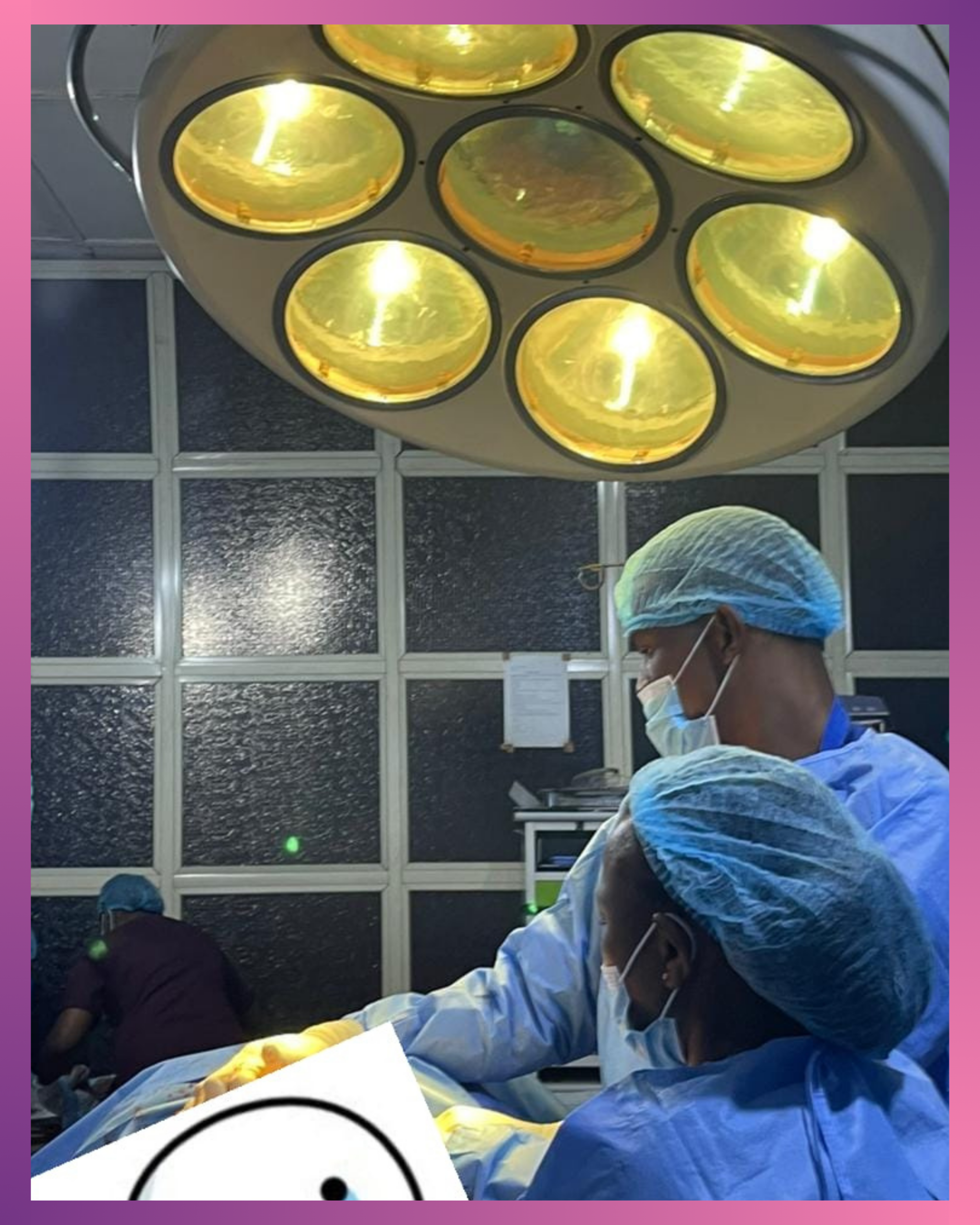
How Is C Section Performed? (Story Of How I Witnessed And Took Part In 3 Cesarean Sections)
Pregnancy c section, cesarean sectionI have witnessed not one, not two but three different cesarean sections in the operating room and during those moments I couldn’t help but think and conclude that men are lucky. He just gets to do the thrusting, deposits his seed and goes away. The rest of the child bearing work is done by the woman up to the day of delivery which could be by vaginal or c section depending on choice and circumstances. Now, as a pregnant mother whom with every passing day means imminence of delivery, you may be asking yourself; ‘should I go vaginal delivery or c section? l know that vaginal delivery involves pushing out but how is c section performed?’, you soliloquized.
SHORT ANSWER
It begins with anesthesia at the spine -> horizontal or vertical incision below belly button -> baby removed -> placenta removed -> suturing layers. But to really understand what it’s like, let me tell you about the first time I saw it happen.
Or you may even wonder how do cesarean sections work? Here is my story. The first time I witnessed a c section, I was casually chilling at the maternity lounge where husbands, boyfriends and relatives alike stay and wait for their hero who is in the labor room. It was 5 in the evening, the lounge was empty and I sat scrolling on my phone screen while waiting for the time to hand over to the night duty nurses. The scrolling would stop abruptly when this stoic looking man came across where I sat and asked me to come with him.
As a very humble and down to earth person, I followed respectfully having not recognized his status in the hospital and to avoid unforseen problems. We walked down the long maternity corridor and appeared in the theatre chambers. I was in my white uniform and he asked me to change to a scrub immediately.
My face was red. I saw myself frowning. Looking forward that moment, it inevitably meant I would get to go home at ‘only God knows when’ time that evening. Should I go back to his face and tell him NO, I wondered. I thought of ignoring him and escaping the hospital through the back door where the nurses’ station is but on a second thought, I still have weeks to spend here before the whole posting experience comes to an end. He will definitely see me again and that could mean bad reputation for me and my school or perhaps a direct call back to the school provost.
I was already getting hungry, I swallowed the saliva that had already bulked up in my mouth and yawned weakly afterwards. I was later in thoughts if this was some kind of punishment for using my phone when I haven’t dismissed work. But there was still this excitement to enter the operating room again after the last one I was in about a year ago, saw me performing the duty of an assistant surgeon on a surgical skin grafting procedure.
I picked one of the new scrubs from the closet at the changing room and put on and staggered to the operating room, little did I know that I was about to witness some beautiful stuff that I have never seen before. The incision, the gore sight, the precision, the fast paced atmosphere, the intricate stitching and the monitor’s beep that still echo in my head as I write this.
How Is C Section Performed?
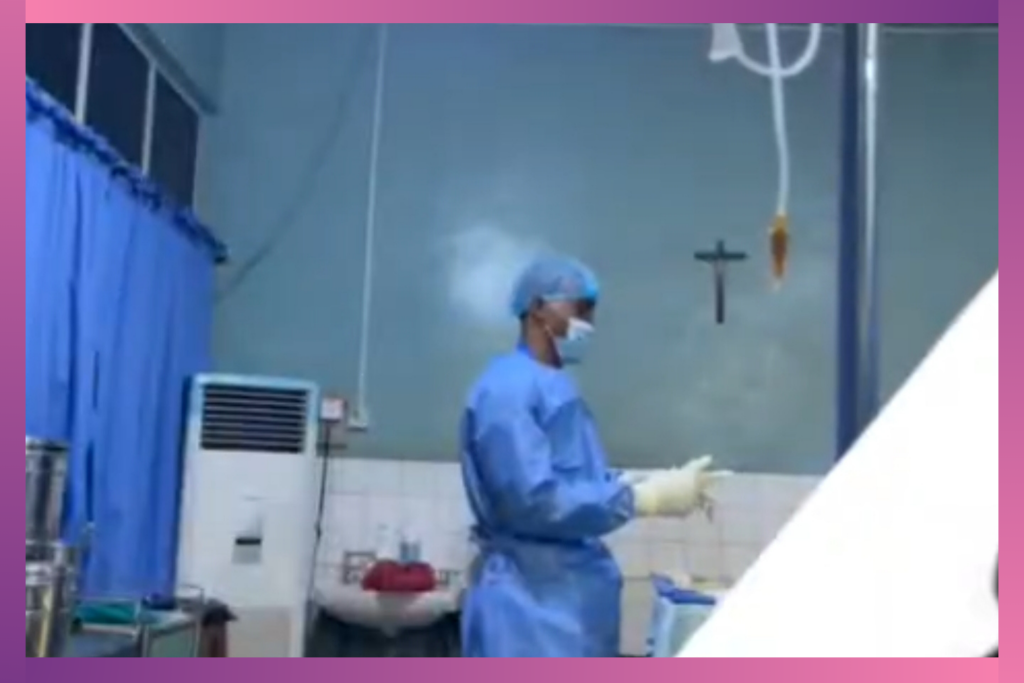
As I entered the operating room, I caught the stoic looking man gaze and hoped for the worst. However, he calmly asked me to head to the end of the room where there’s a tap and wash my hands. I followed the order and washed my hands up to the elbow like I have been taught in the classroom and practiced in previous postings. With a sterile forcep, he picked a gauze and placed it on my palm to dab on my wet hands and dry them off. I did as expected. Infact every item and equipment was already set in place by the scrub nurse.
I had my disposable apron worn on me by this stoic man which he later reinforced with another plastic one and helped me tie their laces at my back. By this time I was already feeling like a great soldier about to go to this massive war while putting on all these hefty layers of armour for protection.
He asked I don my gloves and I did. Meanwhile, he observed that I got big hands. So, size 7.5 surgical gloves which was intended for use as reinforcement wouldn’t fit my big hands. Thus, he went ahead and brought size 8 which I still struggled with to fit my palms and fingers.
The Anaesthesia
The obstetrician was already set while the stoic man who I eventually found out minutes later that he was a nurse anaesthetist hanged and connected two infusions to the both arms of the woman. He made the pregnant lady sit on the operation table, exposing her back. Using the waist as a yardstick and at about five fingers horizontally above the waist, he inserted a cannula (a specialized needle) and aspirated a crystal clear fluid (cerebrospinal fluid).
Subsequently, with a syringe he drew out a liquid medicine from a small bottle (ampoule) and pushed/injected it through the cannula and into the spine of the pregnant lady.
Let me tell you, what he gave or injected into the woman was anaesthesia. A medicine given to numb the body and make you feel no pain. This stoic man helped the woman lay back down gently and within few seconds the obstetrician got to work. He first of all cleaned the area to be worked on with savlon solution to kill off all bacteria and germs and to prevent cross infection and then he draped the woman (covered her with a disposable plastic clothing) and made a cut in the drape from which he could operate on the site.
The Incision & Delivery
With a surgical blade that was fitted into a holder, he made a horizontal incision of about 15-20 cm below the navel, just above the pubic bone. Layer by layer he cut carefully and with maximum focus until he reached the womb (uterus). He made about the same size of incision on the womb and before a minute could pass by, he’s pulled out the baby, cut the cord and handed it over to the receiver nurse for clean up and suctioning.
Well, you may wonder what’s then my use in the operating room. Intermittently, the obstetrician would ask me to kind of stretch out the incised area as in a manner of tearing. Doing it alone would involve him stretch out the side closer to him and then coming across the other side to stretch the one farther away from him. You see why I was needed and important?
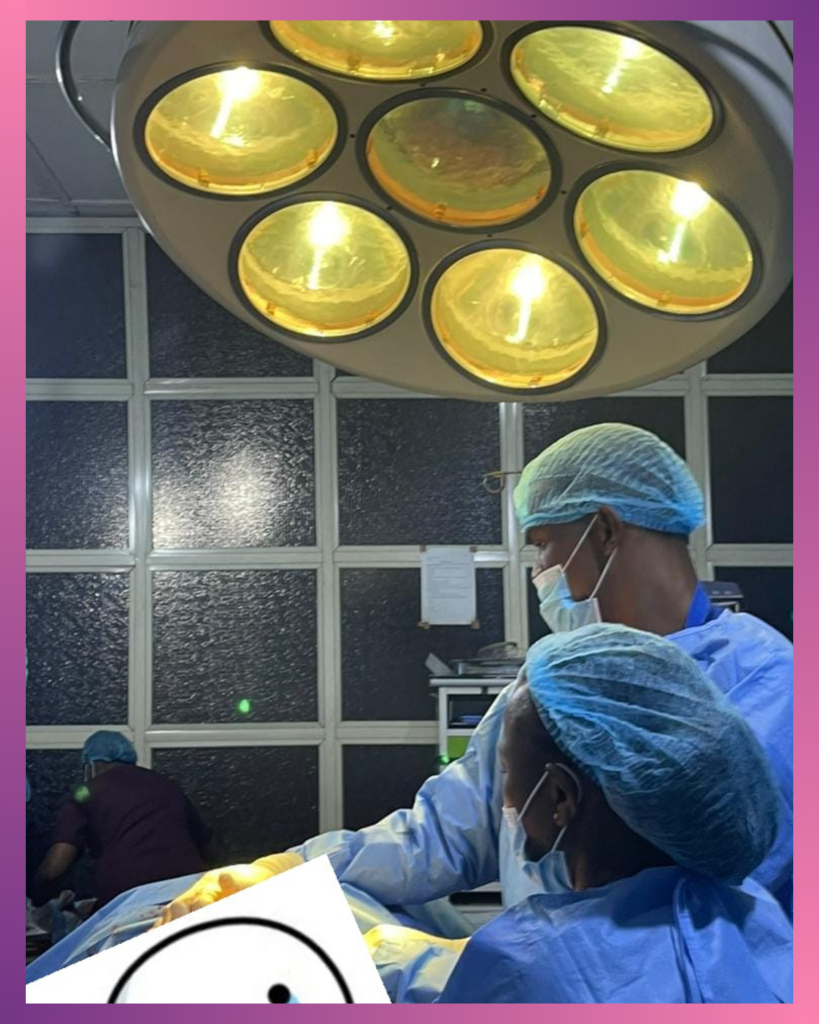
Ocassionally, he would ask me to arrest a bleeding with a forcep and I would do it, I would help to keep other tissues, organs out of view by using a retractor and with a surgical mop I will occasionally dab the site off to ensure better visualization for the obstetrician.
In continuation, the obstetrician after the baby has been born, pulls out the womb out of the belly and places it on top of the woman’s belly. Through the incision made he put his hand and then extracted every remnant including blood clots, amniotic fluid, placenta crumbs etc.
While all these happened, my stoic man who by now I’m already seeing as a friend was at one corner of the room with legs on top of the other, chilling and pressing his phone. Although he would occasionally near around and try to strike up a conversation with this pregnant woman who he administered anaesthesia to analyze if she’s still conscious and alright or if anything is about to go wrong/gone wrong.
READ ALSO: The Ultimate Hospital Bag Checklist For Labor And Delivery (first time moms wish they knew this)
The Suturing
The obstetrician would eventually order for a vicryl (a thread and curved needle) so that stitching could begin. My stoic man anaesthetist provided his request in no time and stitching began. With a needle holder in his hands I marveled at his dexterity as he sutured the womb which at this time was still outside the body and on top of the lady’s belly. Quickly and neatly, he sutured and with a pattern.
He got done with the uterus and pushed it back in place into the lady’s belly. Then he proceeded with suturing the cut he made on the layers of the skin. By this time, my hands and legs were already trembling like someone undergoing a tremor. Remember that I had not eaten and my mates had long ended their shift and gone home. He would suture again for close to another hour until he was done suturing.
The obstetrician cleaned the area worked on with savlon once again and further closed the wound with gauze, providol iodine and plaster (which I tore out for him). The pregnant lady, (who was no more pregnant) was cleaned up and dressed by the scrub nurses and then assisted or wheeled by a porter to the c section ward.
Just when I thought everything had come to an end, the scrub nurse tasked me with washing and cleaning the surgical equipments used. I took a deep breath and got to work while telling myself, ‘hang on, it will only take ten minutes’. In ten minutes, I was done and took off my scrub that was already drenched in some parts with sweat. I changed into my white uniform and didn’t consider a bath any longer in the hospital. I fled.
And this is my story of how I witnessed and partook in a cesarean section for the first time ever. I loved the experience and would eventually go on to partake in another two over the next three weeks.
Do C Sections Hurt During The Procedure?
My direct answer would be yes and no. You see, the only time a c section would hurt is the time preceding it and the time after it. It hurts when a drip is about to be connected to your vein and also when you are about to be placed under anaesthesia. These pains may well come off only as a pinch when punctured with the cannula (specialized needle). The moment after anaesthesia has been administered, no pain is felt again from the waist down. And that’s why no pain is felt when the obstetrician makes an incision on your belly or sutures your cut.
The second time you will feel pain is when the anaesthesia wears off. By this time, you are long out of the operating room and being managed in a ward. This is when the pain starts coming from the cut and daily wound dressing would follow.
How Long Does A Cesarean Section Last?
How long your c section would last totally depends on many factors and variables including expertise, skill and experience of the obstetrician. In the three c sections I have witnessed, they averaged roughly 3 hours long. C sections are not those typical surgeries that last twelve and seventeen hours. There’s a good chance, you will have your baby beside you in good health after 3 hours with c section.
Where Do They Cut For C Section?
Again, all C sections I have witnessed were cut way below the navel and just above the pubis. Each of all the three cuts were made horizontally. However, I have learnt that vertical cuts are also possible especially with the vertical scars I have seen on the belly of different pregnant women.
Who Performs C Sections?
So far as I know, an obstetrician is the only person specialized enough to perform a c – section and an obstetrician performed each of the all three I witnessed. However, I have recently heard while discussing with a medical doctor that c – section is a procedure that is supposed to be known and mastered by any medical doctor as it’s in their curriculum basics. Hence, a general practitioner can perform C section if he’s confident enough in his skills and ready to embrace whatever outcome it carries.
Is C Section Done Awake?
In all three that I have seen, the women were awake and conscious. They responded to questions by the anaesthetic nurse and partook in light jabs and engaged in conversations. So yes, c section is/can be done awake. Remember, no pain is felt.
Is C Section Done Under Local Anesthesia?
Is c section done under local anesthesia? No. A very big no. Local anesthesia as the name implies is used to numb a very specific, particular area. If local anesthesia is administered on your thumb, it is intended to numb only your thumb.
C sections are done under regional anaesthesia. Remember when I said the anesthetist aspirated a crystal clear fluid out of the patient’s spine and later injected a medicine from a little bottle into the spine? This is regional anaesthesia in play. The act by this anesthetist numbs from the abdomen down to the rest of the lower body, such that you cannot voluntarily move your lower limbs and blocks pain signals from traveling to the brain.
So, my dear, if you are still on the fence after being offered an elective c section, then I want you to take a chill pill and know that it’s a beautiful experience and that whatever is being offered to you is for the better. It wouldn’t hurt as you might have thought and it doesn’t last an eternity. Goodluck.

Here, I bridge the gap between hospital protocols and your real-life questions, sharing true stories and evidence-based insights from:
· Direct patient care in teaching hospitals
· Current nursing textbooks and guidelines
· Mentorship from registered midwives and nurses
My goal is to give you the calm, clear information I wish every patient had access to.
Note: I'm documenting my journey to becoming an RN. Always consult a healthcare provider for personal medical advice.
- I Tried The Xiaomi Mi 11 Ultra Camera For My First Ever YouTube Video - April 4, 2026
- Brown Discharge And 6 Weeks Pregnant: What My OB Professor Said (That Calmed My Patient’s Panic) - January 21, 2026
- Does Walking Help Labor Start? (The 1 Reason Nurses Ask You To Walk During Early Labor) - January 11, 2026