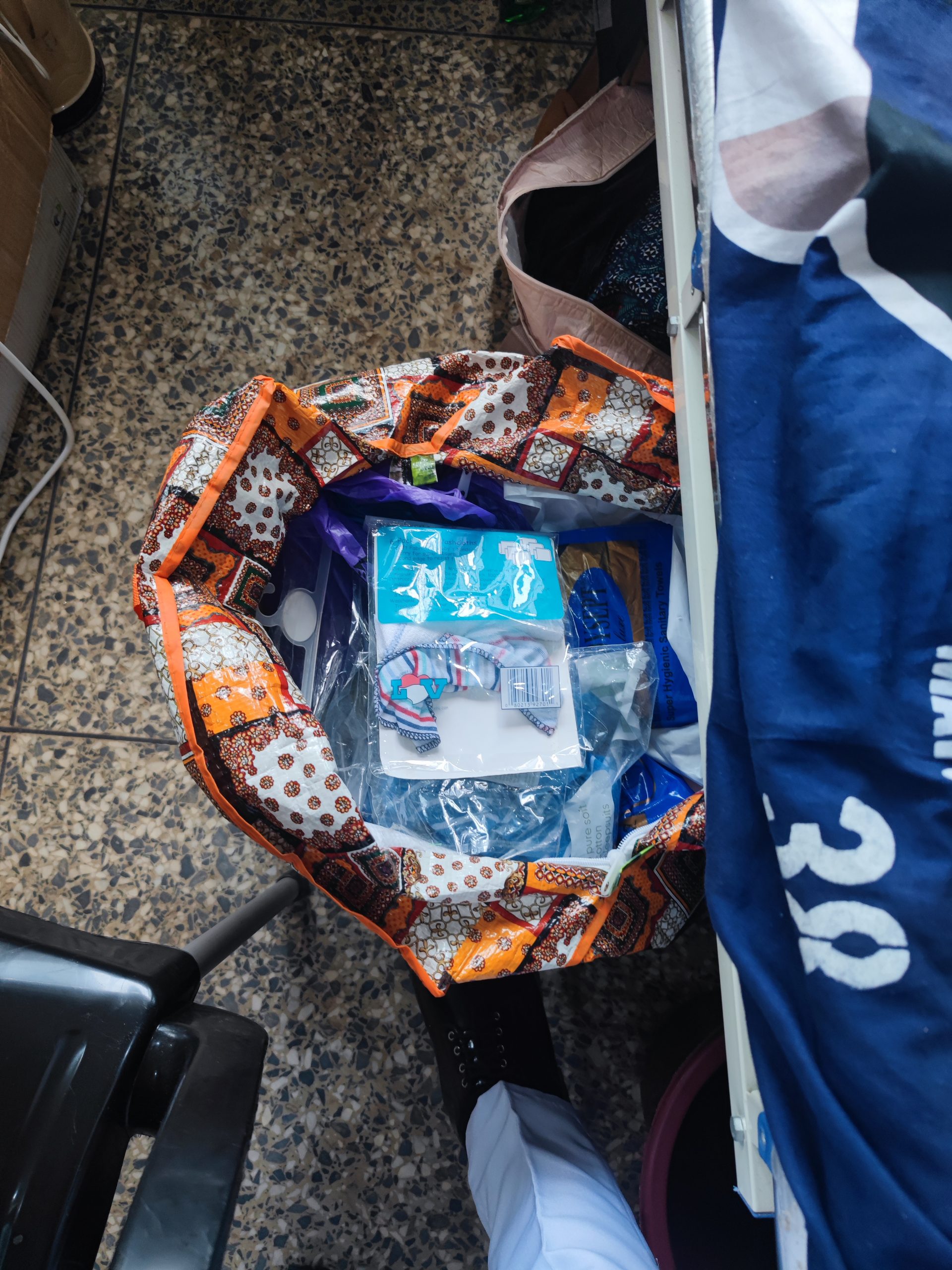
What To Pack In Hospital Bag For Labor And Delivery (My Pick On What Should Be On Your Checklist For Hospital Bag)
Pregnancy Ambu bag, Checklist for labor, Hospital Bag Checklist, Labour itemsI will always find myself relaying back to the saying, “when you fail to plan, you plan to fail.” By this, you should know where I’m headed to. In this case of checklist for hospital bag, as a student nurse with plethora of obstetrics and gynaecology experiences up his belt, I have seen many couples incur unnecessary expenses, discomfort as well as stress upon themselves because they were ignorant of what is indispensable. ‘NO ONE TOLD US’, they will often say.
This particular oil would definitely be sold for barely 2 dollars at ShopRite or Walmart but the hospital will sell it at 1.5 times the price. Sometimes, double of the original price because you have no choice now. You are in the hospital now with your spouse. So, it’s either you settle to buy from the hospital’s store or you spend extra cash on transport to get to the supermarket outside the hospital/maternity home all so as to avoid paying extra to the hospital for this oil.
In the long last, you find out the transport fee when added up with the cost of the oil outside the hospital home is about the same amount of expense when compared to if you had bought right away and therein in the hospital.
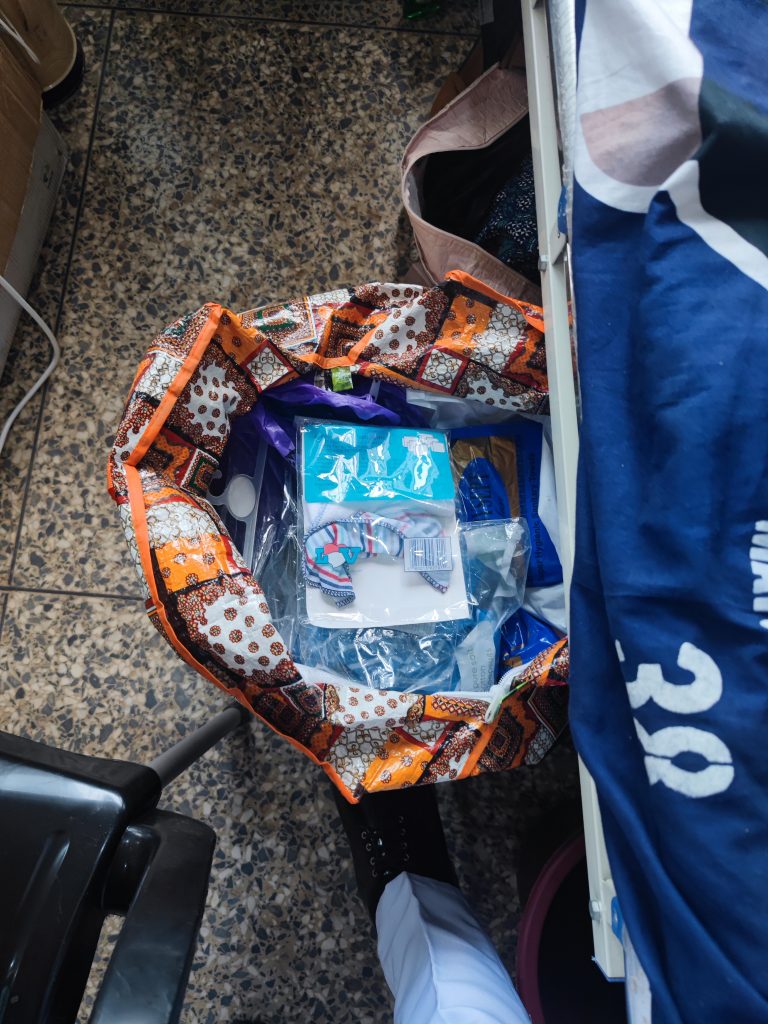
Here’s my catch. Get all the necessary things long and prior to labour. The key is to pack early by the 36th week as most women never reached thirty-seven and thirty-eight weeks when their water broke and cervical dilation started. It comes unexpectedly and like a thief.
My recommendation is to go with someone. It could be with your partner, a friend or a colleague as they could help you make better choices and suggestions as well as help remember items that you have forgotten to pick. That way, you would shop once and shop right. Split items into separate bags and clearly label them for labour, delivery and post partum. Below is my partitioned checklist for hospital bag (labour and postpartum).
THE LABOUR AND DELIVERY BAG
- Insurance card: Unfortunate are they who have health insurance but can’t prove it because they forgot to carry their insurance card with them. Without this, service prices won’t be mitigated as it should be. You will have to pay in full for every service rendered. From pre natal laboratory tests to svd ward (spontaneous vaginal delivery)
- Extra Clothing, Extra Snack/Food, Extra Water: It has always been pitiable when these beautiful creatures carrying something extra come thinking all this pain, all this agony will cease in a couple of hours or so. Little did they know that their cervix will dilate and stop. Little did they know that their contractions will begin to come occasionally but not frequently. Thus, they could enter abnormal labour and remain in the pre-natal for up to 12-24 hours. During this window, they must have soiled and soaked up the cloth they wore with sweat during the wiggling and unrest while battling contraction pain. Explicably, sweating is simply loss of bodily fluid (water) and with loss of water comes dehydration and with dehydration comes thirst. It’s all interconnected.
- Delivery Mat: With the aim to save for extra use, some health centers and maternity homes have taken frugality to its tipping point. I was in a health center where one delivery mat was used for both the mother and the baby. The midwife cut one delivery mat into two equal halves. One she placed under the woman’s introitus and the other she spreadt on the top shelf of a trolley to receive and clean the baby in. Half a delivery mat is never enough for a woman who is to give birth as the delivery mat is meant to hold a lot, which includes blood clots and amniotic fluid.

- Macintosh: Another item that should be in your checklist for hospital bag is Macintosh. I think many of you will judge me for this one. Oh well. I’m a student nurse, still in training but I still can’t get myself to stop being irritated by somethings in the hospital. Every single time I have witnessed a vaginal delivery, I always whisper to myself, ‘my wife won’t get to lie on this’. ‘Multitude had lain on this’ and they are probably in their thousands and with everything that has left their body and spilled on this macintosh’. Now, don’t get me wrong. Every hospital with their own policy. Some hospitals change their labour room macintosh after one week. Some do after every two weeks, some will after a month. While some never at all. They resort to continued carbolization of the macintosh with savlon and co. So, if you are my type of person that feels nauseous at the slightest unsightly….
- Baby Oil: Along with extra clothing and snacks, this is one of the things the hospital never has for you. It’s a necessity and you must come with one. Baby oil has multipurpose as it is used by the midwife to lubricate the head of the baby to aid in pulling it out of the vagina. Some health centers will resort to pouring the oil on the introitus while pulling out to reduce friction and aid maximum mobility. Another use will tend to wiping the baby clean when it is born… A baby is always born with a whitish, slimy coat around its body. Using baby oil is safe in the cleansing of the baby’s tender skin and not water which has some ever slightest level of friction.
- Maternity Pads: For some reasons, this deserves the number one spot on this list but somehow and just somehow, it’s making the 6th spot on this list. Perhaps, because this list is in no accordance to any level of importance. This is more like the holy grail of pregnancy checklist for me. You will inevitably be wet and bleed the moment after delivery. Nurses use this on you to clean you up. In cases where there is a cervical tear and there is blood spurting. The whole area would be occluded visually by blood. Nurses and doctors use this pad to dab on the bleeding area to visualize and spot the precise location/site of the bleeding. In addition, the pad is partly inserted into the womb (should be tied at both ends) after delivery to soak up every blood clot still in the uterus and make it clear and clean. Wait, we talked about oil. Did you ever wonder what is used with the oil to clean off the whitish, creamy coat around a neonate? Is it a tissue, swab, flannel? It’s done with a maternity pad.
- Tissue Roll: In your hospital bag labor checklist, a tissue should make your list. The call of nature will always happen within your two-three day stay at the maternity. You will need to wipe after every urination. Wouldn’t you? You will need to clean up after defecation or don’t you observe that? If you don’t show to the hospital with this, you will rather have your partner resort to ask other patients for theirs or you will have to get outside or to the hospital store to obtain one for some price. Another consideration is that I have seen several women loose anal sphincter control as they push out their baby as a result of pressure acting on the rectum. They spill out fecal contents and any competent nurse midwife wouldn’t allow fecal matter to mix up with uterine contents. Hence, tissue pile is placed under the anus just incase. You will need a tissue.
- Ambu Bag: I have decided to add this to my list for some specific reasons. The ambu bag is perhaps the best medical invention that was ever made and the ignorance of it is the reason behind the death of most newborns. Simple, powerful and effective. Some health centers and maternity homes don’t have it. Sometimes a baby is born and the baby is not breathing. It is very essential that within sixty seconds when a baby is born, the baby should either be breathing on their own or someone is helping that baby to breathe. It’s called the golden minute — 60 seconds. But before that and I will always reiterate, the baby is usually wet when born. A few rubs on the back with a maternity pad is enough for the baby to start breathing. However, if after that and no breathing is seen, providers resort for an ambu bag. Elsewhere, some providers try slapping the back of the baby or their under foot. The Ambu bag comes with two masks. The bigger and the smaller mask. The smaller for pre terms and the bigger ones for the fully mature. The mask is attached to the ambu bag and then placed on so that it covers both the mouth and nose of the baby only. The midwife will then form a rhythm in her mind before applying each squeeze on the ambu bag to push air into the baby’s lung. For example, in her mind she will count or sing; ‘one and two and three and four, SQUEEZE’. This she will do over and over again to help the baby breathe until a cry is heard.
READ ALSO: How To Know That Labor Is Near (My 5 Sure Signs That Labour Is Coming Soon)
Other items which are not so important but still important would be a massage roller to massage the back waist and soothe contraction pains during labour, a small sized bucket (could be transparent) to hold or contain the placenta, should you or your spouse decide to take it home.
THE POSTPARTUM BAG
Before you conclude on what to pack in hospital bag for labor, don’t forget that after delivery comes what follows it.The postpartum bag will include in it every item that would be used after the baby has been born. These are what to pack in hospital bag for labor (postpartum);
- Newborn Outfits: What kind of a mom or a mom-to-be forgets to pack with her, enough newborn outfits? Let me tell you, it’s the one that doesn’t hope for her baby to live. That may sound too graphic but yeah, newborn outfits are indispensable. Try to get the ones that will kind of oversize the baby, 0-3 months because you never knew if the baby will come out bigger than expected. Therefore, it is better the clothing oversizes than undersizes the baby. Outfit should include baby hats and pairs of socks.
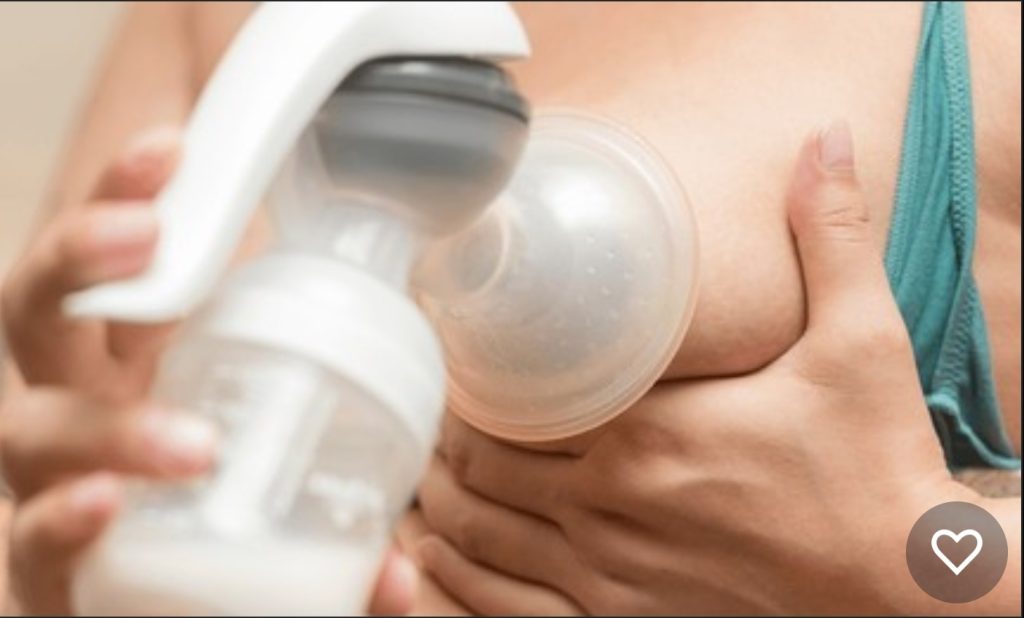
- Breast Pump: This is paramount and deserves to be in your hospital bag labor checklist especially if your baby is pre-term. With pre-term babies (babies who didn’t stay up to 38 weeks inside the womb before they were born), they haven’t fully developed the swallowing reflex. Therefore, they wouldn’t be able to suck a breast yet. It’s required you pack a breast pump since you never know for sure when labour will start. I have seen 30-week pre term babies. I have seen 32 as well. The breast pump aids to extract milk from the mother’s breast into a feeding bottle. This milk is aspirated with a syringe by the nurse midwife and pushed through a nasogastric tube that is passed into the baby’s small intestine via the umbilicus (navel).
- Mild Baby Soap: Almost all hospitals will have the nurse midwives to bath babies but in concordance with the saying, ‘in every twelve, there must be a judas’, some hospitals want your relative, your spouse or whoever is with you to do the baby bathing. This is common with primary health centers. Come with your soap. Mild baby soap. Ask your shop attendant for one and s/he will recommend the best they have in stock.
- Smartphone & Accessories: if you have a thing for books, then it can come in place for this. This is solely for entertainment purposes. After childbirth, everything seems to have come to an end, the long nine months to an an abrupt end. Most moms fall into deep thoughts. With your smartphones, earpods or laptops you can relieve off the boredom, tap into the outside world and stay connected as well.
- Diapers: The instant the baby is leaving your body, it is been cleaned up and worn a diaper before clothing. Imagine when the receive nurse on standby, receives your baby, cleans it up and proceeds to your hospital bag to find the diaper you intend for use on your baby only to find none. He or she would be filled with disappointment but may want to hide it as a trained professional. If the maternity has one, he or she may use that for your baby or she will have to take the toll of leaving the labour room to inform your relative of the need for a diaper and why it is needed asap.
- Maternity Pads: You see why I called it the holy grail of pregnancy items. It appeared in our pre partum checklist and now, it is here again in post partum. You may begin to wonder as a first time mom or mom-to-be, why it is needed in post partum. You see, the uterus is responsive. As your organs begin to return back to their original size and state, some kind of discharge start to come off your vagina. This discharge is called Lochia. This is the uterus shedding off its linings which constitutes, mucus and blood clots. Without this maternity pad high up in between your thighs, you will occasionally wet and stain your clothes like a woman who is menstruating.
- Cash: Lots of it. I mean lots of it. However, this will depend on your location or country. African nations and few European countries like Germany still love carrying cash around. Due to limited mobility as a result of your partum condition, you will be in need to send people on errands to make certain purchases for you. Infact, this is very important because cash is king. You may find yourself in the hospital with solely nothing but with enough money (cash) at hand, you have little to no problem. So, unless you trust people with your credit/debit cards, I don’t think you have problem in this world. That still doesn’t mean you should forget cash and forget your credit/debit card too.
READ ALSO: How Is C Section Performed? (Story Of How I Witnessed And Took Part In 3 Cesarean Sections)

Here, I bridge the gap between hospital protocols and your real-life questions, sharing true stories and evidence-based insights from:
· Direct patient care in teaching hospitals
· Current nursing textbooks and guidelines
· Mentorship from registered midwives and nurses
My goal is to give you the calm, clear information I wish every patient had access to.
Note: I'm documenting my journey to becoming an RN. Always consult a healthcare provider for personal medical advice.
- I Tried The Xiaomi Mi 11 Ultra Camera For My First Ever YouTube Video - April 4, 2026
- Brown Discharge And 6 Weeks Pregnant: What My OB Professor Said (That Calmed My Patient’s Panic) - January 21, 2026
- Does Walking Help Labor Start? (The 1 Reason Nurses Ask You To Walk During Early Labor) - January 11, 2026